
Essential things you need to know before visiting Manuel Antonio National Park
Updated: Aug 21
If you’re planning a trip to Manuel Antonio National Park, you’re about to visit one of the most iconic destinations in Costa Rica. Famous for its lush rainforest, white-sand beaches, and incredible wildlife, Manuel Antonio is often ranked among the most beautiful national parks in the world.
If you want to truly make the most of your visit—from spotting incredible wildlife to enjoying the park’s best beaches—having the right information beforehand makes all the difference.
At Pura Vida Traveling, we help travelers make the most of their experience. This guide covers everything you need to know before visiting Manuel Antonio—so you can enjoy the park like a pro.
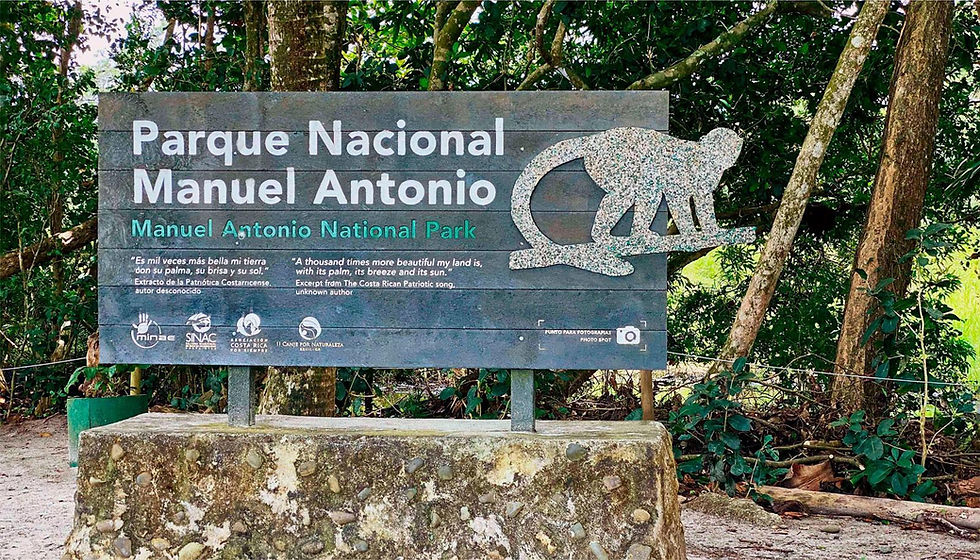
1. Manuel Antonio is small but incredibly rich in wildlife
Manuel Antonio is one of the smallest national parks in Costa Rica, but it has one of the highest concentrations of biodiversity.
Inside the park, you can spot:
Sloths (both two-toed and three-toed)
White-faced capuchin monkeys
Howler monkeys
Squirrel monkeys
Iguanas and reptiles
Deers
Agouti
Over 180 species of birds
And much more
Because the park is compact, animals are easier to find than in larger parks like Corcovado. This is one of the best places in Costa Rica for wildlife spotting, especially for first-time visitors.
2. The hiking trails are easy and accessible
One of the best things about Manuel Antonio is that you don’t need to be an experienced hiker.
The park offers:
Well-maintained and clearly marked trails
Short walking distances
Mostly flat terrain
3. Main trails in Manuel Antonio National Park
Manuel Antonio offers a network of short, easy trails that connect beaches, viewpoints, and rainforest areas. Here are the main trails you should know.
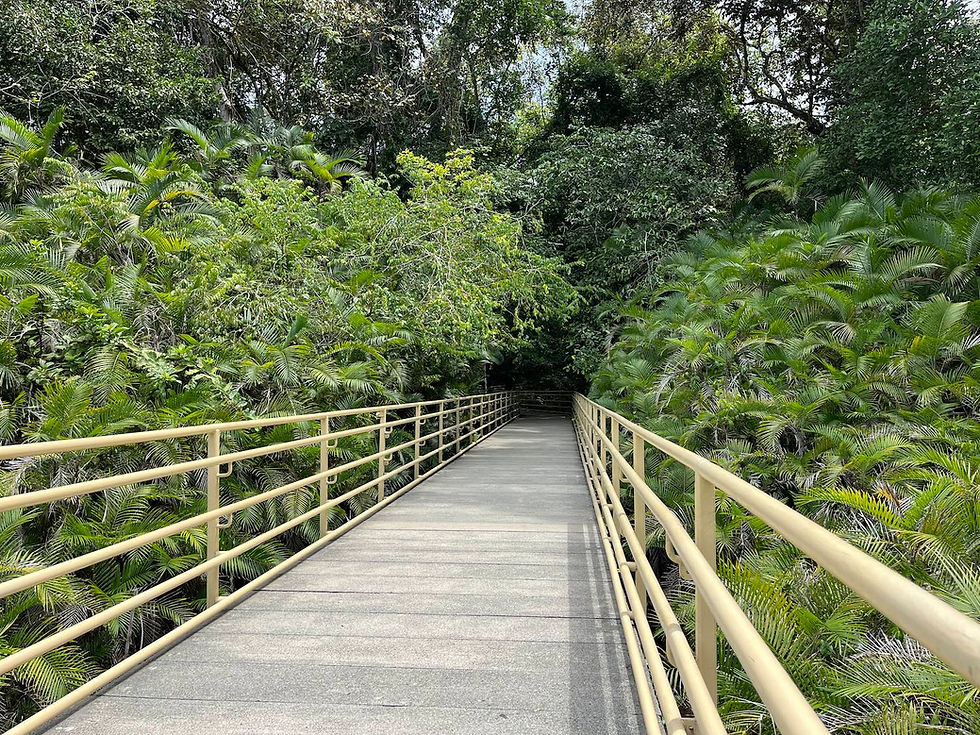
Main Trail + Sendero Perezoso (Sloth / Universal Trail)
The most popular and easiest route in the park
Flat, accessible, and well-maintained (some sections on platforms)
Great for spotting wildlife like sloths and monkeys
Leads to Playa Espadilla Sur through mangroves
This is where most guided tours take place.
Punta Catedral Trail
~1.4 km loop with some of the best views in the park
Connects Playa Manuel Antonio and Playa Espadilla Sur
Offers panoramic ocean viewpoints and island views
One of the must-do trails in Manuel Antonio.
Playa Manuel Antonio & Playa Espadilla Sur Trails
Short, easy paths connecting beaches to the main trail
Pass through mangroves and coastal forest
Includes an observation tower and scenic viewpoints
Perfect for combining wildlife + beach time.
Sendero Playa Gemelas
Leads to a smaller, quieter beach (Playa Gemelas)
Continues toward more remote areas of the park
Great alternative when the main beaches are crowded
Ideal for a more peaceful experience.
Sendero Congo
Short connector trail between Gemelas and Mirador
Known for spotting howler monkeys and capuchins
Keep your eyes up—this is a great wildlife spot.
Sendero Mirador
~1.3 km trail with elevated viewpoints
Offers views of Punta Serrucho and the coastline
Includes stairs and a moderate incline
Best for scenic views and photos.
Sendero La Catarata (Waterfall Trail)
Short trail (~1.2 km round trip)
Leads to a small seasonal waterfall
Less impressive, but good for spotting wildlife
Optional if you have extra time.
Quick summary: Which trails should you do?
If you’re short on time, prioritize:
Sendero Perezoso (wildlife)
Punta Catedral (views)
Beach trails (relax + swim)
If you have more time, add:
Playa Gemelas
Mirador Trail

4. Go early for the best wildlife experience
If there’s one tip you should follow, visit early in the morning (7:00 AM entry).
Why?
Wildlife is more active
Temperatures are cooler
Fewer crowds
By late morning, the park becomes crowded and animals are harder to spot. According to travel experiences, early visitors often see more wildlife and enjoy quieter trails.
5. Opening hours of Manuel Antonio National Park
Manuel Antonio National Park is open from 7:00 AM to 4:00 PM. However, it’s important to know that trails and beaches close earlier, around 3:00 PM. At that time, park rangers begin asking visitors to make their way back toward the exit.
This means you should plan your visit accordingly and allow enough time to fully enjoy both the hiking trails and the beaches.
6. You must book tickets in advance
Manuel Antonio National Park has a strict daily visitor limit, and tickets often sell out in advance—especially during high season.
Here’s what you need to know:
Tickets must be purchased online
You’ll need to choose a specific entry time
Same-day availability is very limited
To make the most of your visit, it’s highly recommended to book ahead—otherwise, you may not be able to enter the park.
The entrance fee is $18.08 for adults, while children aged 2 to 11 pay $5.65. Tickets should be secured online in advance HERE.
Keep in mind that some guided tours already include the entrance ticket, while others don’t—so always double-check before booking. Arriving without a valid ticket could prevent you from entering the park.
At Pura Vida Traveling, we can help you organize everything—from park tickets to transportation and guided tours—for a smooth, stress-free experience.
7. The park is closed once a week
Manuel Antonio National Park is closed every Tuesday. Remember to plan your itinerary accordingly.

8. Hiring a guide makes the difference
You can visit the park on your own—but if you want to experience the wildlife, hire a guide.
Guides:
Spot animals you’d likely miss on your own—guides are in constant communication, sharing real-time sightings to help you see even more wildlife
Use telescopes for close-up views
Share fascinating insights into animal behavior and the unique microclimates that make the park so diverse.
9. The beaches inside the park are some of the best in Costa Rica
Manuel Antonio is unique because it combines rainforest + beaches in one place.
Inside the park, you’ll find:
Playa Manuel Antonio (calm and swimmable)
Playa Espadilla Sur
Playa Las Gemelas
Playa Escondido (the trail to this beach is currently closed for maintenance)
These beaches are known for clear water, soft white sand, and jungle surroundings.

10. Bring the right gear for hiking
Even though the trails are easy, preparation is key.
Recommended items:
Comfortable walking or hiking shoes
Metal water bottle (plastic is not accepted inside the park)
Insect repellent
Sunscreen
Camera or binoculars
Binoculars or a guide’s telescope can dramatically improve wildlife spotting.
11. No food or plastic allowed inside
To help protect the incredible wildlife in Manuel Antonio, the park enforces a few important rules:
No outside food
No plastic bags
No feeding animals
These measures are essential to keep animals—especially monkeys—from becoming aggressive or dependent on humans.
Inside the park, there is a designated eating area known as “the cage”, a protected space designed to keep animals out. Here, you’ll find a selection of food and drinks like sandwiches, chicken, fresh fruit, and smoothies—perfect for a quick break during your visit.
12. Expect crowds (it’s one of the most popular parks in Costa Rica)
Manuel Antonio is one of the most visited parks in the country.
This means:
Busy trails
Crowded beaches
High demand for tickets
The solution: go early, visit off-season, or explore less popular trails.
13. Best Time to Visit Manuel Antonio
Dry Season (December – April)
Sunny weather
Best beach conditions
More tourists
Green Season (May – November)
Fewer crowds
Lush rainforest
Afternoon rain
Early mornings are always the best time—no matter the season.
14. Respect the wildlife
The wildlife is the highlight—but it must be protected.
Rules to follow:
Don’t feed animals
Keep your distance
Stay on trails
Human interaction can harm animals and disrupt the ecosystem.

15. Manuel Antonio is perfect for all types of travelers
Whether you’re:
A backpacker
Traveling with family
On a honeymoon
Visiting Costa Rica for the first time
Manuel Antonio is one of the most accessible and rewarding parks in the country.
16. How to get to Manuel Antonio National Park?
Getting to Manuel Antonio National Park is relatively easy, especially since it’s one of the most popular destinations in Costa Rica. The park is located just 20 minutes from Quepos and about 3.5 hours from San José. Here are the main ways to get there.
Shared or private shuttle (most convenient)
One of the easiest ways to reach Manuel Antonio is by shuttle.
Door-to-door service from major destinations
Comfortable, air-conditioned vehicles
No need to worry about directions or parking
Ideal for families or travelers who want a stress-free experience
At Pura Vida Traveling, we offer both shared and private transportation across Costa Rica—making your journey smooth from start to finish.
Rental car (best for flexibility)
Renting a car gives you the freedom to explore at your own pace.
Well-paved roads from San José to Manuel Antonio
Scenic drive along the Pacific coast
Easy access to nearby beaches and restaurants
The drive takes 3 to 3.5 hours, depending on traffic.
Important: Parking near the park entrance is limited, so arrive early to secure a spot.
Public bus (best budget option)
Traveling on a budget? The bus is a reliable and affordable option.
Direct buses run from San José to Quepos daily (travel time is 3.5 to 4 hours)
From Quepos, take a local bus to Manuel Antonio (every 20 minutes, 20-minute ride, 370 colones one way)
The total cost is very low compared to other options
Domestic flight (fastest option)
If you’re short on time, you can fly from San José to Quepos.
20-minute flight
Beautiful aerial views of the coastline
Quickest way to reach the area
From Quepos airport, it’s just a 20-minute drive to the park.
Final thoughts: Is Manuel Antonio worth it?
Absolutely. Manuel Antonio National Park offers a rare combination of easy hiking, accessibility, incredible and varied wildlife, and stunning beaches. It’s easily one of the best experiences in Costa Rica, which we definitely recommend doing!
Frequently asked questions
4×4 necessary? Road Conditions?
The road to Manuel Antonio National Park is completely paved. A 4×4 or high car is not necessary. Just be aware that the road is very narrow and curvy once you pass Quepos, so drive slowly.
Are there lockers for rent in Manuel Antonio National Park?
Yes, the park offers locker rentals at the entrance. It costs ~$6 USD a day (7 AM to 4 PM).
Are there bathrooms inside Manuel Antonio National Park?
Yes, there are bathrooms at the entrance and inside the national park, at 3 different points. You can also find one facility with bathrooms, showers (no soap), and changing rooms inside the national park.
Can I park the car close to Manuel Antonio National Park?
Manuel Antonio National Park does not have an official government-run parking lot. Instead, you’ll find several private parking lots owned by locals located about 150 meters from the park entrance.
These lots are commonly used and generally safe
There is usually an attendant present during the day (typically until 3–4 PM)
Expect to pay around $10 USD (≈ 5000 CRC) for the day (roughly 7 AM to 4 PM)
As you approach the park, you’ll likely see parking attendants standing by the road and waving you in. Once you enter, they’ll guide you to an available spot.
Can I find a guided tour on-site?
You can try to book directly with the official guides at the entrance of Manuel Antonio National Park, but availability is not guaranteed. Just like entrance tickets, guided tours can sell out—especially during busy seasons—so it’s best to book in advance.
Can I visit Manuel Antonio without a guide?
Yes, you can explore the park on your own. The trails are well-marked and easy to follow, making it accessible for all types of travelers.
Can I bring a backpack into the park?
Yes, but it may be checked at the entrance. Make sure you’re not carrying restricted items like food or single-use plastics.
What happens if it rains?
The park remains open during rain, and wildlife can still be active. However, trails may be slippery, so wear appropriate shoes.
Where should I stay to visit Manuel Antonio?
Most travelers stay in:
Quepos (more local and budget-friendly)
Manuel Antonio area (closer to the park, more hotels with views)
How much time do I need in Manuel Antonio National Park?
Most visitors spend 2 to 3 hours exploring the trails, spotting wildlife, and then 1 to 2 hours relaxing on the beaches. You can stay longer, but a half-day is usually enough.


Comments